Top 10 Conveyor Manufacturers in India 2026


Nextsoft Engineering & Solution (NES) is a conveyor manufacturers in India providing customized industrial conveyor systems and material handling solutions for manufacturing, warehousing, logistics, packaging, automotive, food processing, pharmaceutical, cement and other industrial applications.
We manufacture and supply a wide range of belt conveyors, roller conveyors, incline conveyors, modular belt conveyors, slat chain conveyors, vertical reciprocating conveyors and customized material handling systems. Each conveyor can be designed according to product dimensions, load capacity, conveyor length, required speed, available floor space and automation requirements.
Our conveyor solutions are developed to improve material flow, reduce manual handling and support efficient production and warehouse operations. Depending on the project, our scope can include conveyor design, fabrication, electrical and control integration, installation, commissioning and technical support.
What Is a Conveyor System?
A conveyor system is a mechanical material handling system used to transport products, components, raw materials, cartons, pallets or bulk materials from one location to another. Conveyor systems can be designed for horizontal, inclined, vertical or overhead material movement and can be integrated with production equipment and industrial automation systems.
Industrial conveyors are commonly used in manufacturing plants, warehouses, distribution centers, logistics facilities, packaging units, automotive factories, food processing plants, pharmaceutical facilities, cement plants and bulk material handling operations.
- Belt Conveyor
- Incline Belt Conveyor
- Scissor Lifts
- Vertical Reciprocating Conveyor
- Slat Chain Conveyor
- Free Flow Conveyor
- Weighing & Sorting Machine
- Modular Belt Conveyor
- Flexible Roller Conveyor
- Powered Roller Conveyor
- Idler Roller Conveyor
- Roller Conveyor
- ACB Panel
- PLC / VFD Panel
- APFC Panel
- Inverters
- UPS
- Transformers
How Does a Conveyor System Improve Material Handling?
A properly designed conveyor system improves material handling by creating a controlled and repeatable flow of products between different stages of manufacturing, storage, packaging and dispatch.
- Reduces manual handling: Automates repetitive transportation tasks and reduces unnecessary movement of products and materials.
- Improves productivity: Supports continuous material movement between machines, workstations and process areas.
- Optimizes workspace: Incline, vertical and overhead conveyors can help utilize available floor and production space more efficiently.
- Supports automation: Conveyors can be integrated with PLCs, VFDs, sensors, weighing systems, sorting systems and other industrial automation equipment.
- Improves material flow: Provides controlled movement between production, storage, packaging and dispatch operations.
Types of Conveyor Systems
NES designs and manufactures different conveyor configurations according to material characteristics, load capacity, conveyor layout, required speed, operating environment and automation requirements.
- Belt Conveyor – A belt conveyor uses a continuous moving belt to transport products and materials. It is widely used in manufacturing, packaging, warehouses, assembly lines and general material handling applications.
- Incline Belt Conveyor – An incline belt conveyor transports materials between different elevations. It is commonly used in packaging, manufacturing, warehousing and material transfer applications.
- Vertical Reciprocating Conveyor (VRC) – A Vertical Reciprocating Conveyor moves materials between different floor levels. VRC systems are suitable for factories, warehouses and industrial facilities requiring vertical material transfer.
- Slat Chain Conveyor – A slat chain conveyor uses interconnected slats or chains to transport rigid, heavy or bulky products. It is suitable for automotive, engineering and manufacturing applications.
- Free Flow Conveyor – A free flow conveyor is designed for controlled product movement and accumulation in assembly and production environments.
- Modular Belt Conveyor – A modular belt conveyor uses interlocking belt modules. It is suitable for food processing, packaging, pharmaceutical and manufacturing applications where easy maintenance and flexible configurations are required.
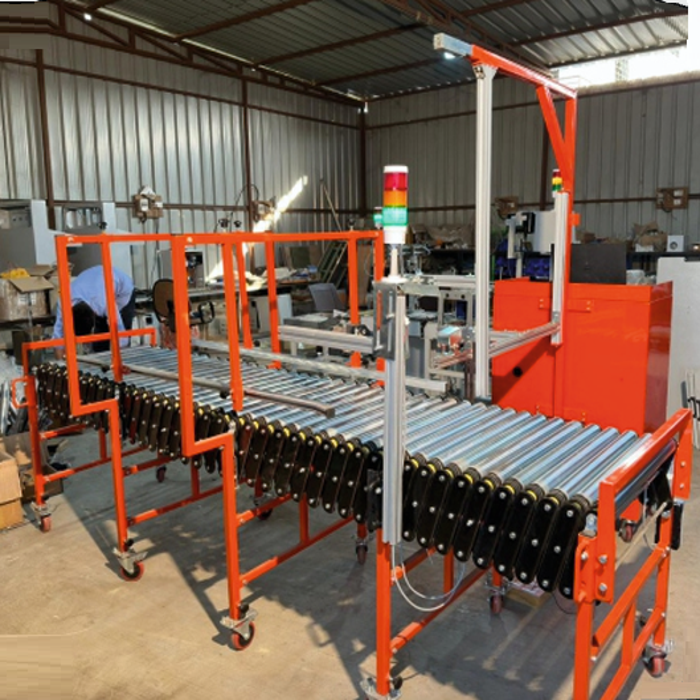
- Flexible Roller Conveyor – A flexible roller conveyor can be expanded, contracted and repositioned according to workspace requirements. It is useful for warehouses, dispatch areas, loading docks and temporary material transfer applications.
- Powered Roller Conveyor – A powered roller conveyor uses motor-driven rollers to transport cartons, containers, pallets and other suitable products. It is commonly used in warehouses, logistics centers and production facilities.
- Idler Roller Conveyor – An idler roller conveyor uses non-powered rollers to move products through manual pushing or gravity-assisted movement.
- Screw Conveyor – A screw conveyor uses a rotating screw mechanism to transport powders, granules and other bulk materials. It is commonly used in cement, agriculture, food processing, chemical and bulk material handling applications.
- Bucket Conveyor – A bucket conveyor, also known as a bucket elevator, transports bulk materials vertically using individual buckets. It is suitable for grains, cement, fertilizers, minerals and other bulk products.
- Overhead Conveyor – An overhead conveyor transports products above the production floor. It helps save floor space and is commonly used in automotive manufacturing, paint shops, assembly lines and other industrial applications.
Conveyor System Testing and Quality Checks
Conveyor systems should be evaluated for mechanical performance, load handling, alignment, drive operation and safety before being placed into regular operation. Testing requirements depend on the conveyor design, application, load and operating environment.
| Test | What Is Checked | Expected Result |
|---|---|---|
| Load Capacity Test | Conveyor operation under specified load | Stable operation within rated capacity |
| Speed Test | Conveyor speed and movement | Consistent and controlled product movement |
| Alignment Test | Belt, roller and structural alignment | Smooth and accurate material flow |
| Safety Test | Emergency stops, sensors and safety devices | Correct response to safety commands |
| Drive Test | Motor, gearbox and drive operation | Reliable and controlled operation |
| Trial Run | Conveyor operation under working conditions | Smooth operation without abnormal performance |
Key Features and Benefits of Conveyor Systems
Industrial conveyor systems can improve material movement, production efficiency and workflow when properly selected and integrated into the overall process.
- Robust industrial construction: Conveyor structures and components can be selected according to load and operating conditions.
- Automation compatibility: Conveyors can work with PLC controls, VFDs, sensors and other automation equipment.
- Controlled material movement: Provides consistent transportation between different process stages.
- Efficient operation: Automated transportation can reduce repetitive manual movement and process delays.
- Custom configurations: Conveyor length, width, height, speed, belt type, rollers and controls can be selected according to the application.
- Space optimization: Incline, vertical and overhead configurations can help utilize production and storage space.
Applications of Conveyor Systems
Conveyor systems are used across multiple industries to transport products, components, cartons, pallets and bulk materials.
- Automotive Manufacturing: Automotive conveyor systems can transport vehicle components, assemblies and parts between manufacturing and assembly stations.
- Manufacturing and Engineering: Conveyors can transfer components and finished products between machines, workstations, inspection areas and storage locations.
- Packaging: Packaging conveyor systems can connect filling, sealing, labeling, inspection, sorting and packing operations.
- Warehousing and Logistics: Conveyors can move cartons, packages, containers and other goods between receiving, storage, sorting, packing and dispatch areas.
- Food Processing: Food processing conveyors can transport ingredients, packaged foods and finished products according to application-specific hygiene and material requirements.
- Pharmaceutical Manufacturing: Conveyor systems support controlled material movement between manufacturing, inspection, packaging and storage processes.
- Cement and Construction: Heavy-duty conveyors can transport aggregates, minerals and other materials through industrial processing operations.
- Mining and Bulk Material Handling: Bulk material conveyors can transport minerals, aggregates, coal and other bulk materials over specified distances.
How to Choose the Right Conveyor System
Selecting the right conveyor requires understanding the complete material handling requirement rather than choosing a conveyor based only on its name. Important factors include:
- Material type: Identify whether the system will transport cartons, components, pallets, food products, powders, granules or bulk materials.
- Load capacity: Determine the maximum product weight and required throughput.
- Conveyor dimensions: Consider product size, conveyor width, length, height and available installation space.
- Required speed: Establish the required conveyor speed according to production or handling rate.
- Layout: Determine whether horizontal, inclined, vertical, curved or overhead transportation is required.
- Operating environment: Consider dust, moisture, temperature, hygiene requirements and other environmental conditions.
- Automation requirements: Identify requirements for PLCs, VFDs, sensors, weighing, counting, sorting or other controls.
- Maintenance: Select components and configurations that allow practical inspection, cleaning, adjustment and replacement.
Why Choose Nextsoft Engineering & Solution?
- 450+ Projects Delivered: NES has completed more than 450 projects across different industrial applications.
- Custom Engineering: Conveyor systems are developed according to product characteristics, load, layout, throughput and automation requirements.
- Application-Focused Solutions: We consider operating conditions, available space, material characteristics and process requirements while developing conveyor solutions.
- Complete Material Handling Support: Depending on the project, our services can include design, fabrication, installation, commissioning and technical support.
- Industrial Applications: Our solutions are suitable for manufacturing, automotive, packaging, logistics, food processing, pharmaceuticals, cement, mining and other industries.
Conveyor Manufacturer in India
If you are looking for a conveyor manufacturer in India, NES can help you select and develop a conveyor system according to your material handling, production and automation requirements.
Whether you require a belt conveyor, incline conveyor, roller conveyor, modular belt conveyor, slat chain conveyor, vertical reciprocating conveyor or customized material handling system, our engineering team can evaluate the application and recommend a suitable configuration.
Get a Customized Conveyor System
Planning a new conveyor system or upgrading an existing material handling process? Share your product details, load capacity, required conveyor length and width, desired speed, layout, photographs or drawings and automation requirements with our team.
Contact Nextsoft Engineering & Solution (NES) for a customized conveyor system solution in India and discuss your material handling requirements with our technical team.
Frequently Asked Questions
What is a conveyor system?
A conveyor system is a mechanical material handling system used to transport products, components, raw materials, cartons, pallets or bulk materials from one location to another. Conveyors can be horizontal, inclined, vertical, overhead or customized according to the application.
Which type of conveyor is best for industrial applications?
There is no single conveyor type that is best for every industrial application. Belt, roller, slat chain, modular belt, screw, bucket, incline and vertical conveyors are selected according to material type, load capacity, speed, distance, layout, operating environment and automation requirements.
Can conveyor systems be customized?
Yes. Conveyor systems can be customized according to conveyor length, width, height, load capacity, speed, belt or roller configuration, layout, product characteristics and automation requirements.
How much does a conveyor system cost in India?
The cost of a conveyor system in India depends on its type, dimensions, load capacity, belt or roller specification, drive system, structure, controls, automation requirements, installation conditions and project quantity. A customized quotation provides a more accurate price.
Where are industrial conveyor systems used?
Industrial conveyor systems are used in manufacturing plants, automotive factories, warehouses, logistics centers, packaging units, food processing facilities, pharmaceutical plants, cement industries, mining operations and other material handling applications.
Can conveyors be integrated with automation systems?
Yes. Industrial conveyors can be integrated with PLCs, VFDs, sensors, counters, weighing systems, sorting equipment, barcode systems, safety devices and other automation equipment depending on the application.
What maintenance does a conveyor system require?
Typical conveyor maintenance includes inspection of belts or rollers, bearings, chains, drive components, alignment, fasteners, sensors, safety devices and electrical connections. Preventive maintenance requirements depend on the conveyor type, operating hours, load and environment.